

The community of Niobrara – perched where the Missouri and Niobrara rivers meet – has faced more than its share of hardship. In nearly 175 years, the village has endured four major floods, lost multiple bridges, and relocated twice. Still, its people remain rooted in their land – and in each other.
In 2024, that kind of resilience became the focus of a research project. Teams from Nebraska U., Oklahoma State, and Louisiana State set out to study how rural communities weather natural disasters. Rather than approaching Niobrara with a top-down research agenda, the team asked locals what they wanted to learn. The answer was clear: they wanted to document their own stories of resilience.
“They wanted to know, ‘How have we been resilient in the past?’ And, ‘How can we learn from these in the future?’” Raquel Taylor, a postdoctoral research associate at Nebraska U., told Nebraska Today.
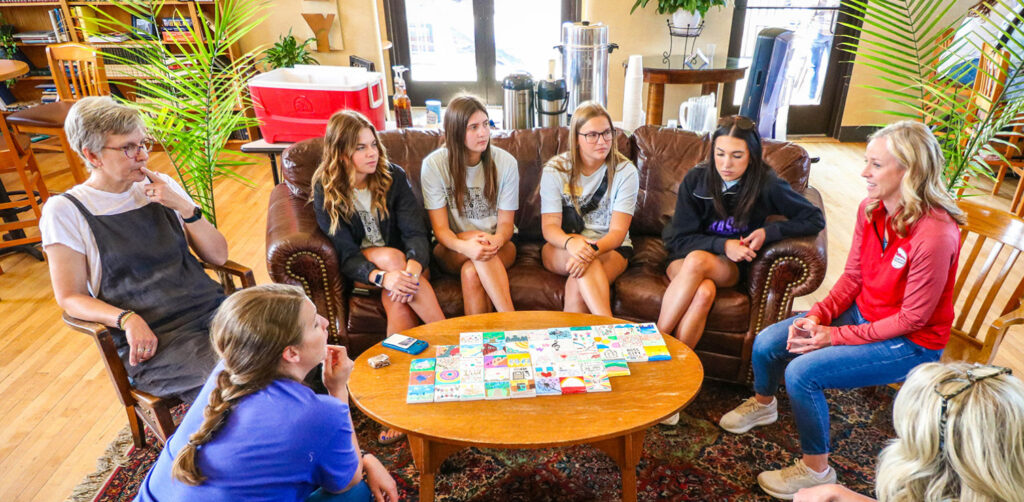
Taylor partnered with two local college students, Lina Bauer and Harley Stark, and what started as a booth at Niobrara’s annual Bridge Days quickly grew. Soon, the pair were visiting homes, recording 23 oral and visual histories from residents who had endured floods, relocations, and rebuilding.
One unforgettable story came from Delberta Peterson, who recalled a devastating 1952 flood. She remembered neighbors helping each other cross a swaying drawbridge while carrying food, belongings, and even a washer and dryer.
Peterson was one the first to move to higher ground when the town relocated in 1974.
“There was no ‘my stuff before yours,’” Bauer said. “Everybody just helped everybody.”
The stories are now being archived and shared. The most common word residents used? Grit.
“The people care about the people,” Taylor said. “They care about their neighbors. They want their neighbors to be successful, and they want their village to continue in the future. The overarching thing that we saw in Niobrara was that they loved the land. They want to protect that and protect the livelihoods of their neighbors.”
In Niobrara, resilience isn’t just survival. It’s a way of life.