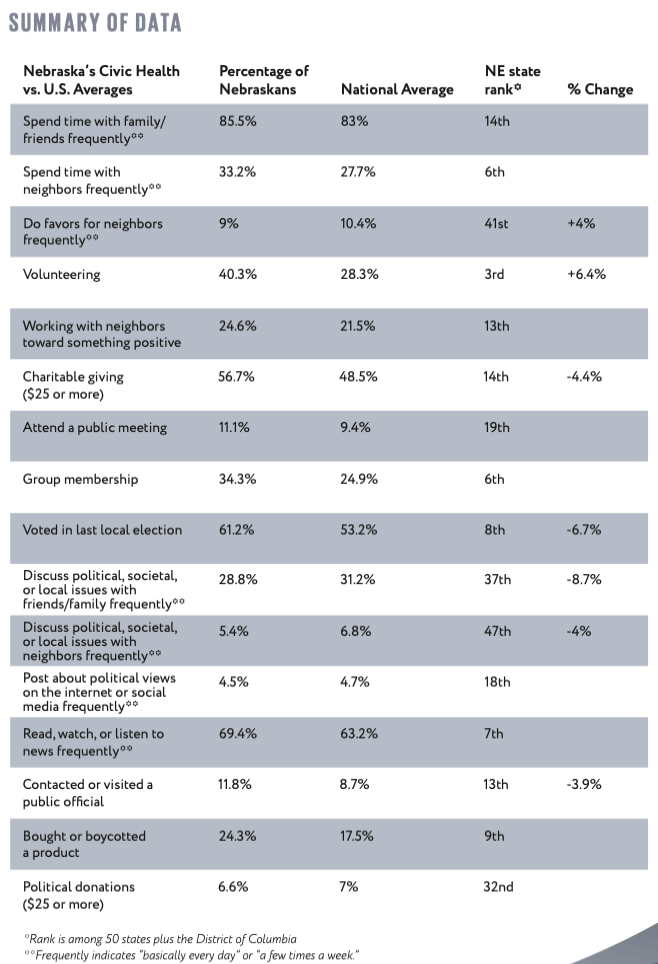
Civic knowledge is our awareness and understanding of political, societal, and local issues. It’s also a cornerstone of democratic participation. In Nebraska, 69.4% of residents report frequently consuming news and information related to various topics, placing the state seventh nationally. This strong showing suggests that Nebraskans value staying informed, which is key to effective engagement in civic life.
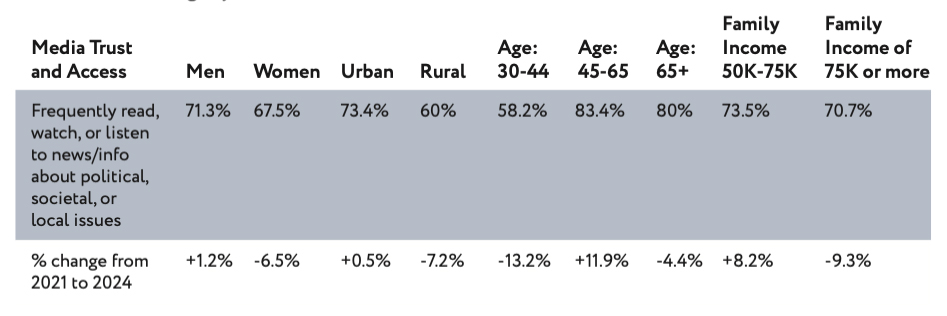
However, trends over the past several years reveal shifts in who is tuning in. News consumption is declining among women and younger Nebraskans. Women reported a 6.5% drop in frequent engagement with news between survey years, and Nebraskans aged 30-44 showed a significant 13.2% decline. On the other hand, men showed a modest 1.2% increase, and residents ages 45-65 reported a notable 11.9% rise. These changes point to growing disparities in civic information access and habits, differences that could influence how various groups participate in public life and decision-making.
These trends become even more pressing when considered alongside Nebraska’s shifting local media landscape. According to recent data, nine counties in the state have no local news organization, and 11 counties have no resident journalists. In 55 counties, only two or fewer full-time local journalists remain. The areas most affected by this lack of coverage are those with lower household incomes, lower education levels, and limited broadband access.
When trusted, accessible news sources disappear, civic knowledge suffers. Residents lose vital connections to local decision-making, public services, and community affairs. These “news deserts” weaken transparency and accountability, making it harder for citizens to engage meaningfully with local institutions.